In modern office environments, computer-generated noise can disrupt employee concentration while the physical space these devices occupy remains considerable. A common solution involves relocating computers to a remote server room, yet this introduces the challenge of facilitating convenient file and data access. KVM extenders are professional devices designed specifically to address this need.
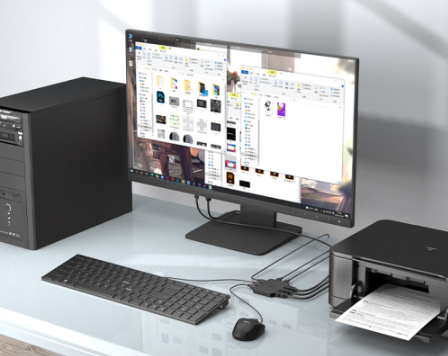
The acronym KVM stands for Keyboard, Video, and Mouse. A KVM extender enables users to operate computer systems from a remote location. The device typically consists of a transmitter and a receiver. The transmitter connects to the computer and is responsible for capturing keyboard, mouse, audio, and video signals. The receiver is deployed in the user's workspace and connects to peripherals such as the monitor, keyboard, and mouse. This solution can extend the signal transmission distance from 15 feet to several miles, effectively overcoming the physical limitations of standard HDMI, DisplayPort, and USB cables.
Employing KVM extenders offers multiple advantages. These devices support remote computer control and are suitable for a wide range of application scenarios. In environments requiring the operation of multiple computer systems, integrating KVM switching functionality can significantly optimize desk space utilization, allowing management of multiple systems with just one set of peripherals. From the perspectives of user experience and security, IT teams can centralize noisy PCs in server rooms, enabling unified management and maintenance of equipment and enhancing overall security.
The application scope of KVM extenders covers numerous professional fields. Typical use cases include industrial control rooms, military command centers, airport operations systems, traffic management platforms, emergency dispatch centers, film and video post-production, broadcast television, educational institutions, and medical facilities.
Based on differences in transmitted signal types, KVM extenders can be categorized into HDMI, VGA, DisplayPort types, among others, while also supporting USB, digital/analog audio, and serial signals like RS232. Classified by transmission medium, there are primarily three solution types: Solutions based on CATx cables are suitable for signal extension within 150 meters/490 feet and offer high cost-effectiveness; Fiber optic-based solutions are suited for longer transmission distances, high-bandwidth 4K60 signal transmission, and scenarios requiring immunity to electromagnetic interference; IP network-based solutions support remote connections via LAN or the internet and excel in environments with high scalability requirements.
Various KVM extender technologies continue to evolve, providing users with remote access solutions tailored to different scenarios. Through proper configuration, organizations can achieve optimized work environments and improved equipment management efficiency.